fucking delicious
fuckingdelicious.co
https://fuckingdelicious.co/recipes/trader-joes-frozen-croissant-hack
Pastries
Trader Joe's Frozen Croissants Done Right
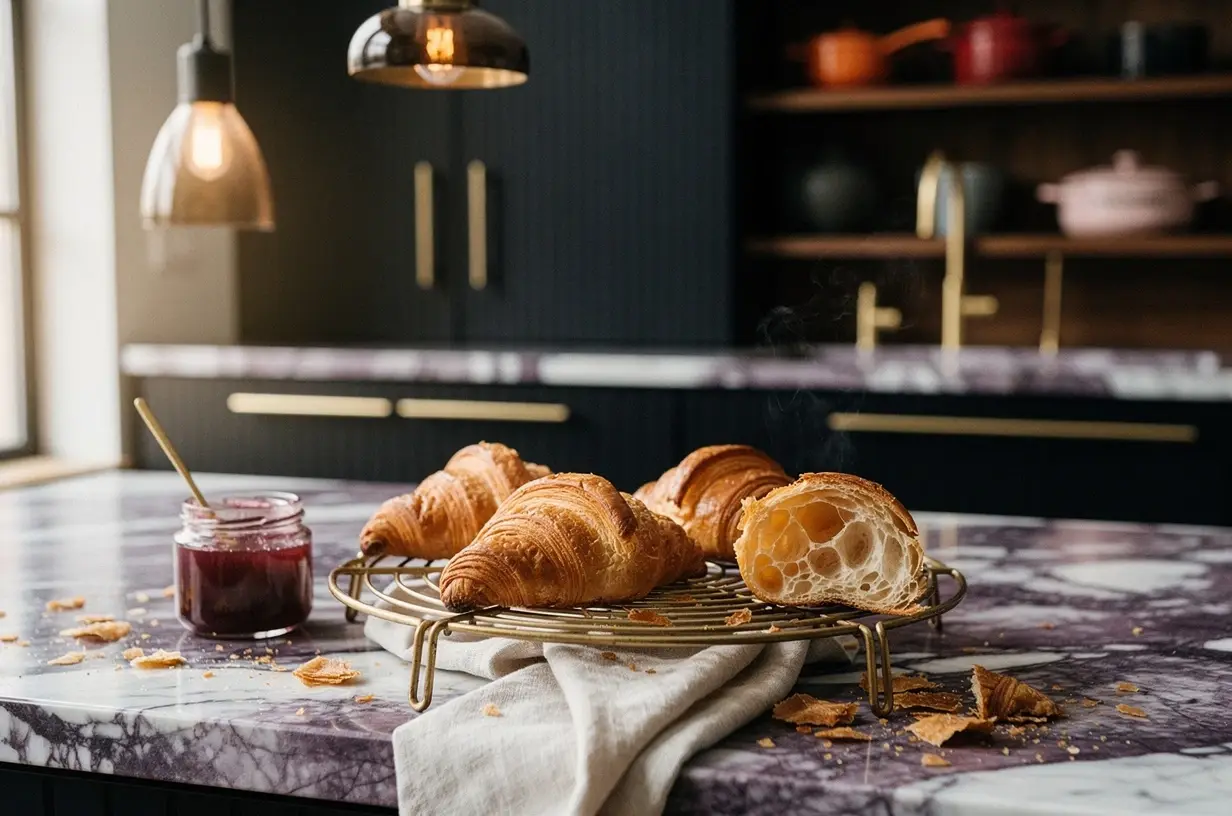
Trader Joe's sells frozen croissants that are, and I need you to hear me on this, made in France from real butter and real laminated dough. They cost like $5 for a box of four. Five dollars for four croissants that are made in FRANCE. Making croissants from scratch takes two days, 27 butter folds, and a level of patience that I genuinely do not possess. These take five minutes of actual work and an overnight proof. That's it. But here's the problem: most people underbake them. They pull them out when they're golden on top but the bottoms are still pale and doughy and the interior is underdone and gummy. Then they go online and say 'TJ's croissants are mid.' No. YOUR croissant is mid because you pulled it out too early. A properly baked TJ's croissant is shatteringly flaky on the outside, tender and layered on the inside, and tastes like you went to a French bakery and spent $6 on a single pastry except you spent $1.25 and you're still in your kitchen in socks. The overnight proof is non-negotiable. The egg wash is non-negotiable. The slightly-longer-than-the-box-says bake time is non-negotiable. Follow these instructions and you will have bakery-quality croissants for breakfast tomorrow. Set them out tonight. Wake up to croissant glory. Let's fucking go.
Ingredients
- 4 Trader Joe's Frozen Croissants (from the frozen section, the ones in the rectangular box)
- 1 egg beaten with 1 tbsp water (egg wash)
- Flaky sea salt (optional, for topping)
Instructions
- 1
Set them out the night before
Place 4 frozen croissants on a parchment-lined baking sheet, spaced about 3 inches apart. Cover loosely with plastic wrap. Leave them on the counter overnight. Not in the fridge. On the counter at room temperature. They need 8-9 hours to proof (rise). Set them out before bed and they'll be puffy and doubled in size by morning. If your kitchen is cold (below 65°F), they might need an extra hour or two.
- 2
Preheat and egg wash
In the morning, preheat your oven to 375°F. The box says 400°F. The box is a liar. 375°F gives the interior time to cook through before the outside burns. Beat an egg with a tablespoon of water and brush the tops and sides of each croissant gently. This is what gives them that glossy, deep golden, bakery-window shine. Don't skip this. Unglazed croissants look like they're still frozen.
- 3
Bake longer than you think
Bake for 16-18 minutes. The box might say 12-14. Ignore the box. You want these DEEPLY golden brown, almost dark on the ridges and tips. The bottom should be golden too, not pale. Underbaked croissants have gummy, doughy centers and all those beautiful layers are wasted. When you think they're done, give them 2 more minutes. A properly baked croissant should feel light when you pick it up, like it's mostly air and butter held together by faith.
- 4
Cool for exactly 5 minutes
Let them cool on the sheet pan for 5 minutes. Not longer. After 5 minutes they've set enough to hold together but they're still warm inside. Tear one open. Listen for the crackle. See the layers. Watch the steam rise. This is the moment. Eat it plain. Or with butter. Or with jam. Or with Nutella if you're trying to have a spiritual experience at 7am on a Wednesday.
Baker's Notes
- The overnight proof is what makes these work. It's not optional and you cannot speed it up. Well, you can proof them in a turned-off oven with a bowl of hot water next to them for about 3-4 hours, but overnight is easier because you're sleeping and not watching dough rise.
- 375°F, not 400°F. I will die on this hill. 400°F browns the outside too fast and leaves the center underdone. 375°F is slower and more forgiving and produces a croissant that's cooked all the way through with a beautiful deep color.
- If you forget to set them out the night before, you can proof them in a warm spot for 3-4 hours. Turn your oven on to 200°F, then turn it OFF and put the croissants inside with the door cracked. The residual warmth speeds up the proof. Check after 3 hours.
- These are incredible as sandwich vehicles. Slice one open, add ham and gruyere, and you've got a ham and cheese croissant that costs less than a dollar to make. With a fried egg inside and some hot sauce, it's the best breakfast sandwich you've ever eaten.
- TJ's also sells frozen chocolate croissants (pain au chocolat) and they follow the exact same process. Overnight proof, egg wash, 375°F. The chocolate melts inside during baking and creates this gooey center that is frankly pornographic.
Nutrition
Calories
290
Fat
17g
Carbs
28g
Protein
6g
Sugar
6g
Serving
1 croissant
Notes
FAQ
My croissants didn't rise overnight. What happened?
Can I bake them straight from frozen?
Why do mine always burn on the bottom?
These taste as good as a bakery. How is that possible?
Reviews
Loading reviews...